
Technical Case Study G-5003
CASE G-5003: Ruggedized Touchscreen Module for an Explosion Proof Application
Overview
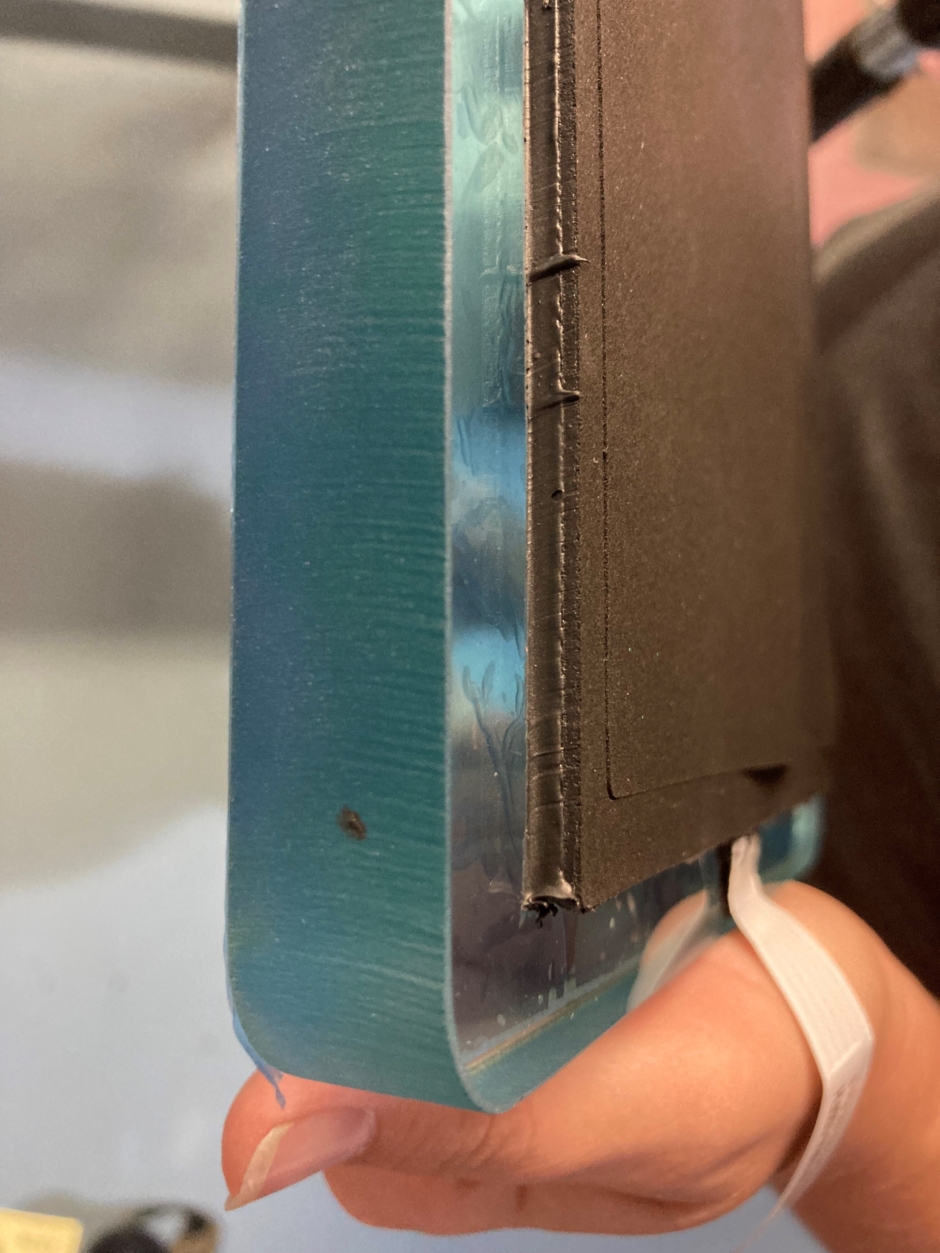
Originally, our customer's products were built and sealed with an oil and water resistant silicon gasket. The gasket sealing process was resulting in a greater than 50% fail/touch up rate. Across the sealant, pinholes were extremely prevalent. Besides these holes and the 50% fail rate, the process was also time-consuming and difficult, making it not only frustrating for the customer, but also inefficient for our company and our other timelines.
Quality Control Review
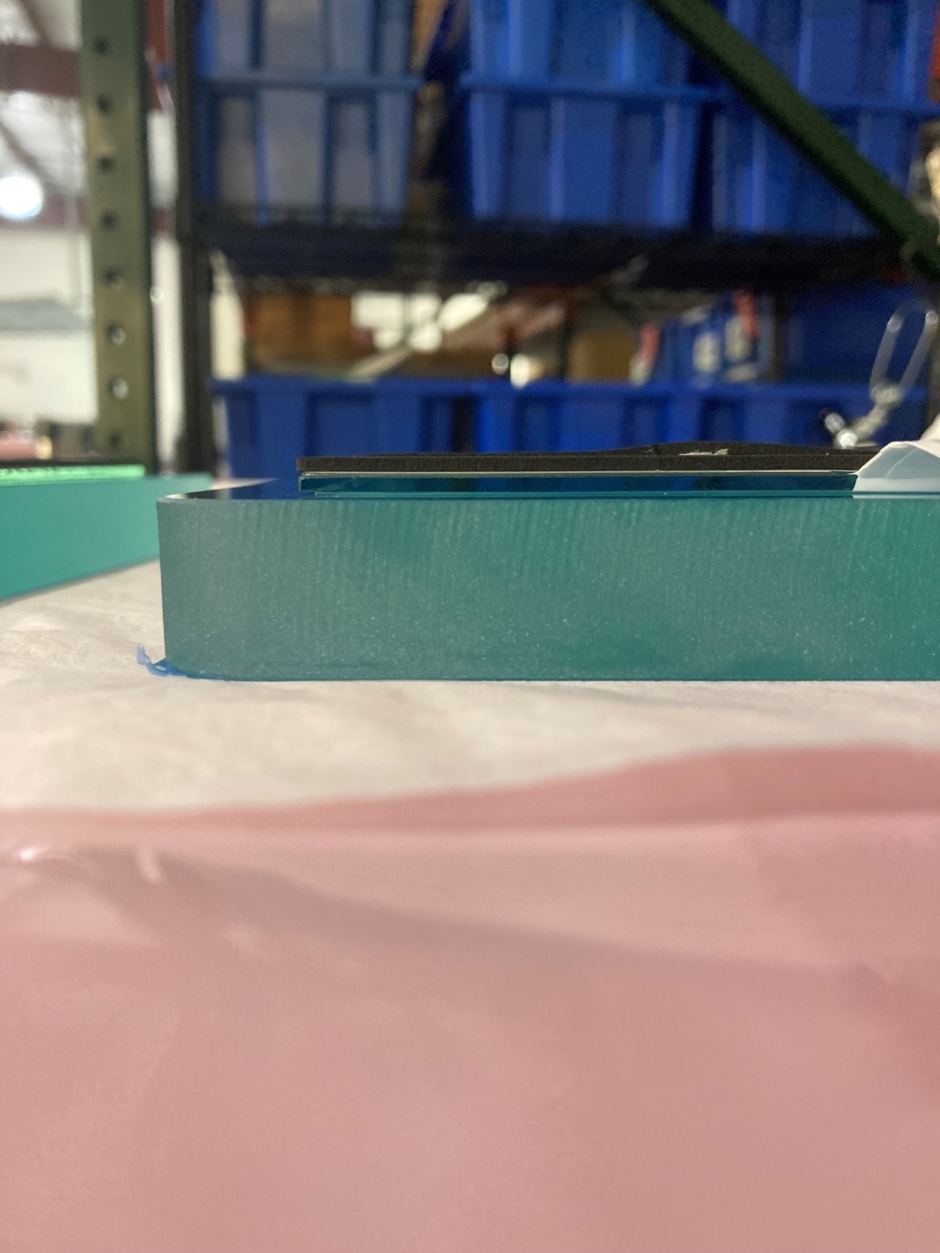
The product the customer was requesting was built of a thick layer of glass which was dry bonded to a touchscreen, with a screen protector as well as foam gasket applied to the touchscreen. The glass was of a larger size than the touchscreen stack and consequently, the customer wanted a sealant applied onto the glass around the touchscreen stack and the foam gasket. This would ideally create a contaminant resistant gasket (since the foam gasket on its own cannot keep out all contaminants).
A traceability exercise confirmed the following:
The dispensing and forming of the gasket around the foam and the touchscreen was done originally done by hand. Each dispensation took at least 6 minutes, and with a rate of more than 50% needing redone or touched up, the total time for each part was at least 12 minutes. Pinholes were a common occurrence, making it necessary to remove the gasket and re-dispense it. A lack of a high level of uniformity in the application of the gasket material created a further step: hand scraping the gaskets to ensure it was within the requested dimensions.
This process was deemed untenable for customer requirements and for company efficiency.
Improvements made during review:
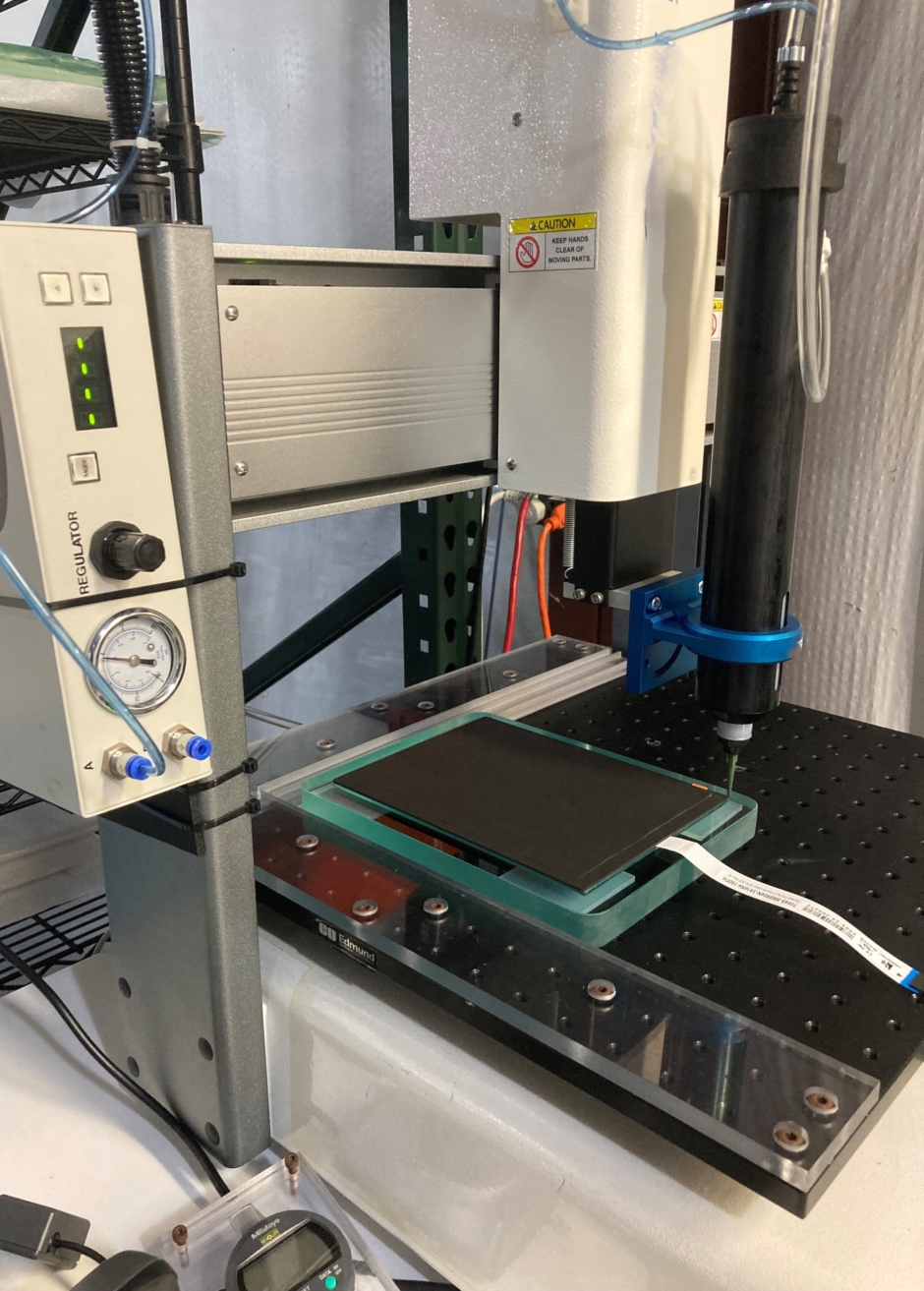
In order to improve the process, our Research and Development team designed and tested an automated machine dispenser. A machine that was formerly used for inspection purposes was refitted to be a 3-axis dispenser robot.
Results
Now, the gasket is dispensed by machine. Each dispensation is fully automated after calibration and takes less than 3 minutes, with a new touch up rate of 18%. The emergence of pinholes was significantly reduced. After introduction of the machine, dispensation is no longer a difficult job only a very skilled employee can complete, but instead, with proper training, any employee can run the dispenser.
Key Points:
- Traditional methods may not be up to quality standards
- Continuous investigation into improving processes increases efficiency